

Table of Contents
- 1. Understanding SOC 2 automation fundamentals ⚙️
- 2. Drata: deepest control mapping and government readiness 🏢
- 3. Sprinto: most affordable entry point with guided onboarding⚡
- 4. Vanta: category pioneer with the broadest ecosystem🧭
- 5. Selecting the right GRC platform for your startup 🎯
- 6. Transitioning from manual evidence collection to automation 🔄
- 7. Integrating GRC tools with your financial systems 📊
- 8. FAQs ❓
- 9. Book a free consultation 📞
Canadian startup founders face mounting pressure from enterprise prospects to prove data security before signing lucrative contracts. Implementing a Governance, Risk, and Compliance (GRC) platform transforms this rigorous requirement into an automated, highly manageable system. Establishing a robust SOC 2 posture through platforms like Drata, Sprinto, or Vanta enables you to accelerate sales cycles, satisfy investor due diligence, and build unshakeable customer trust. This article walks you through evaluating the top GRC tools, understanding their unique architectural advantages, and selecting the right automation partner to scale your operational compliance seamlessly.
Understanding SOC 2 automation fundamentals ⚙️
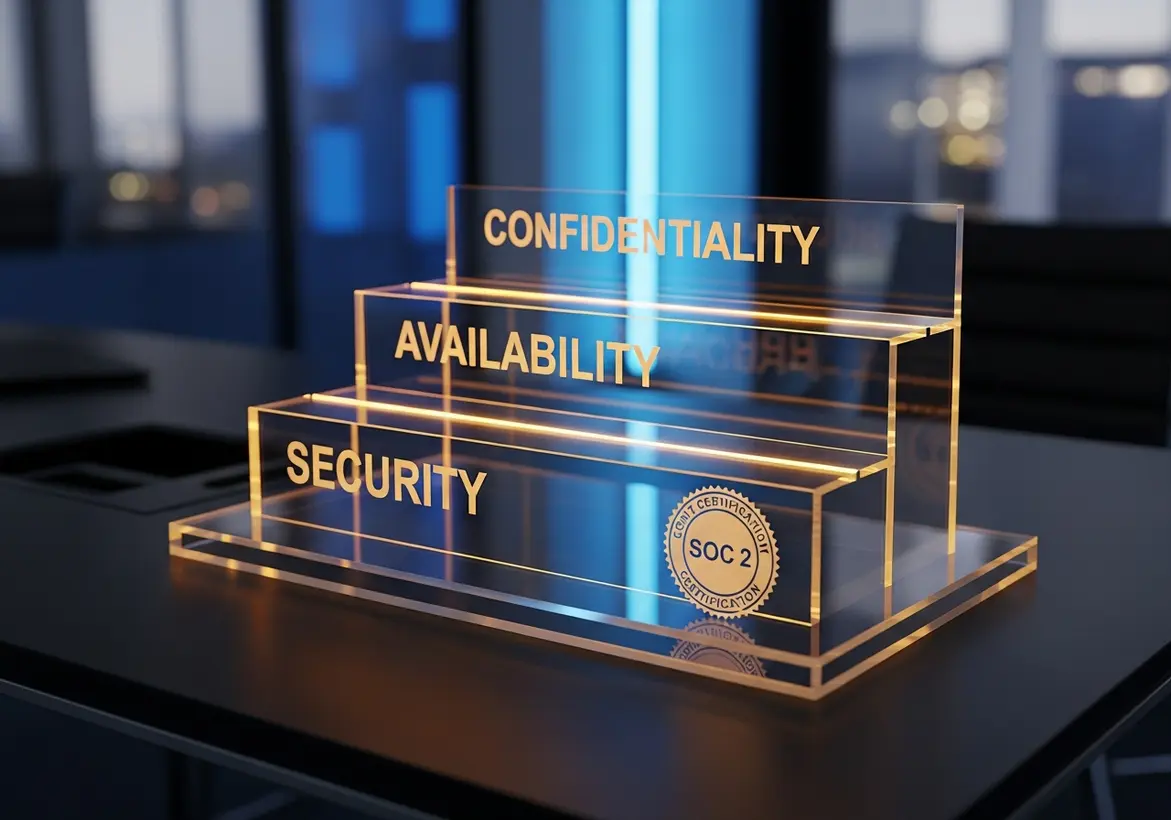
The SOC 2 framework establishes a critical standard that validates how service organizations protect customer data and maintain processing integrity across their operations. Achieving this validation historically required hundreds of spreadsheet rows, manual screenshot collection, and endless back-and-forth communication with external auditing firms. GRC platforms replace this archaic, error-prone process by connecting directly to your cloud infrastructure, human resources systems, and identity providers to monitor security controls continuously in real-time.
All three platforms (Drata, Vanta, and Sprinto) connect to your cloud infrastructure, identity providers, and HR systems to monitor security controls continuously. They collect evidence automatically through API integrations, replacing manual screenshot gathering. The honest baseline: Drata (4.8/5 on G2), Vanta (4.6/5 on G2), and Sprinto (4.8/5 on G2) each achieve this core mission well. The differences are in the breadth of integrations, the depth of framework support, pricing, and how much hand-holding you receive during onboarding.
"Compliance is a continuous state, not an annual event." - Anton Chuvakin
This principle defines effective modern security automation. You will establish policies, implement technical controls, and document evidence automatically through API integrations rather than manual labor. The right platform reduces operational risk, streamlines engineering workflows, and creates definitive audit trails that satisfy the most rigorous investors. Instead of seeing SOC 2 readiness as an operational burden, see it as a powerful trust framework that accelerates enterprise procurement and builds internal resilience.
Drata: deepest control mapping and government readiness 🏢
Drata's strongest, most verified differentiator is its Drata Control Framework (DCF) — a framework-agnostic control catalog that allows custom control creation, custom framework imports, and bidirectional linking of evidence across standards. Evidence collected for one framework automatically satisfies overlapping requirements in another. A Fortune 500 case study showed 44% NIST CSF compliance achieved with zero additional work, purely through carry-over from existing SOC and PCI controls.
Drata is the only platform in this group with a verified FedRAMP 20x Pilot Low Authorization and dedicated CMMC product support — making it the defensible choice for founders targeting U.S. government or defense procurement. It also supports the full NIST family (800-53, 800-171, CSF) alongside ISO 27001, HIPAA, GDPR, PCI DSS, and SOC 2.
Running SOC 2 and ISO 27001 in parallel is a genuine strength: Drata's own documentation states these two frameworks share enough controls that overlapping evidence only needs to be collected once.
Sprinto: most affordable entry point with guided onboarding⚡
Sprinto's primary advantage is price. At roughly half Vanta's entry cost, it is the most budget-accessible option for early-stage startups. Beyond pricing, it differentiates through dedicated compliance expert guidance during onboarding — unlike the more self-serve experiences at Vanta and Drata.
Sprinto's continuous monitoring flags control failures and surfaces context-rich remediation guidance with recommended actions. This is not prescriptive step-by-step technical instructions for every scenario — it is contextual alerts that help your team understand what failed and what category of fix is needed. The platform also auto-realigns controls and policies when regulatory requirements change.
This structured acceleration enables rapid, verifiable results. For instance, Quickly Technologies achieved SOC 2 Type 2 at month 7 through EIM-guided implementation, displaying their verifiable posture via their trust center. Leveraging streamlined GRC workflows compresses timelines dramatically, turning compliance into a rapidly achievable business asset that drives trust.
Vanta: category pioneer with the broadest ecosystem🧭
Vanta created this category. Founded years ahead of its competitors (Y Combinator W18 batch, 2018 product launch), it now holds a $4.15B valuation, 12,000+ customers across 58 countries, and has led the G2 Security Compliance Grid for five consecutive quarters. CrowdStrike's Falcon Fund publicly recognized it as a "compliance automation pioneer."
Vanta's most concrete advantage is integration breadth: 375–400+ integrations covering all major cloud providers, DevOps tools, HR systems, and identity providers — more than any competitor. Its 35+ out-of-the-box frameworks include FedRAMP, CMMC, HITRUST, DORA, and the EU AI Act. Case studies show SOC 2 Type I readiness achievable in as little as 10 days for teams with clean existing infrastructure.
The trade-off: Vanta is the most expensive option at scale, with steep headcount-based pricing that grows significantly with renewal. G2 reviewers note some integrations perform shallower security checks than Drata's deeper per-integration automation.
Selecting the right GRC platform for your startup 🎯
Choosing between Drata, Sprinto, and Vanta requires aligning the platform's specific strengths with your startup's engineering culture and immediate business trajectory. Your decision must carefully account for your current tech stack complexity, the internal engineering resources available for initial implementation, and your strategic roadmap for future certifications beyond standard SOC 2 requirements. A lean, early-stage startup prioritizing sheer speed to market might lean toward Vanta or Sprinto, while a company anticipating highly complex enterprise or government procurement processes might favor Drata's deep customization capabilities.
Choose Drata if... You need to run multiple compliance frameworks simultaneously, you have enterprise or government procurement requirements (FedRAMP, CMMC, NIST), or your engineering team wants maximum control, customization, and is comfortable with a more configuration-heavy setup.
Sprinto helps if the budget is a primary constraint, your team lacks dedicated compliance expertise and needs guided onboarding, and your near-term certification scope is limited to one or two core frameworks (SOC 2 + ISO 27001).
Vanta is a good choice if speed to first certification is your top priority and your team is comfortable with a self-serve setup. You also need the widest possible integration coverage out of the box, or you are targeting frameworks beyond the standard SOC 2 / ISO 27001 pair (HITRUST, FedRAMP, DORA, EU AI Act).
Regardless of the automation tool you select, the software is only as effective as the underlying operational processes you design. Instead of treating software selection as the final compliance step, treat it as the bedrock foundation upon which your overarching security governance program is built, monitored, and maintained for the long term.
Transitioning from manual evidence collection to automation 🔄
Moving from manual spreadsheets to automated GRC platforms represents a fundamental shift in how your startup manages organizational and operational risk. The first step involves meticulously mapping your existing workflows to the platform's automated monitors, identifying where human intervention is still absolutely necessary versus what can be entirely handed over to API integrations. This transition naturally exposes undocumented processes, forcing your team to establish clear, repeatable procedures for employee onboarding, access control, and vulnerability management.
Pro tip: Use automated evidence collection tools for SOC 2 - manual screenshot gathering consumes significant preparation time that could be entirely spent on actual security implementation.
Once properly configured, the platform actively enforces your established policies rather than passively storing them, alerting management immediately if an employee inadvertently bypasses a critical security control. Advanced startups leverage these platforms for complex, multi-layered governance programs beyond basic baseline security. Ultimarii achieved elite ISO 42001 certification alongside standard SOC 2 requirements through EIM-guided AI governance implementation, displaying progress transparently on their trust site during active sales cycles. This level of outward transparency proves that automated evidence collection directly fuels enterprise revenue growth.
Integrating GRC tools with your financial systems 📊
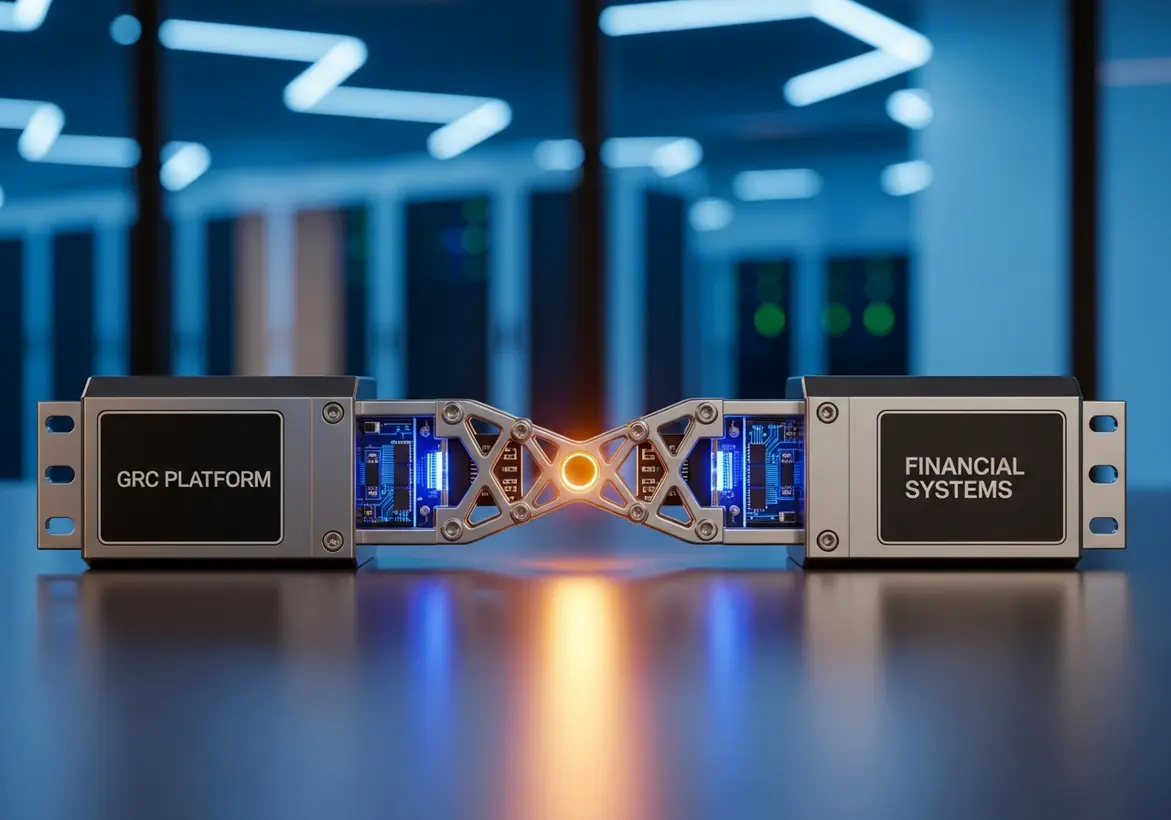
GRC platform implementation rarely happens in an isolated vacuum; it deeply intersects with your overarching financial systems and broader operational budget. When ambitious startups integrate their security compliance initiatives with automated payroll and robust bookkeeping, they create a comprehensive governance ecosystem that sophisticated investors highly scrutinize during due diligence phases. You will centralize user access reviews, streamline complex offboarding procedures, and ensure fundamental financial data integrity across your entire organizational footprint.
The powerful synergy between automated compliance monitoring and automated financial management significantly reduces ongoing administrative overhead. Founders who strategically build security practices, maintain perfect compliance documentation, and implement investor-grade financial reporting simultaneously position themselves for premium market valuations. Maintaining distinct but seamlessly integrated systems ensures that both your security auditor and your financial stakeholders receive the exact, verified data they critically require without disrupting your engineering team's momentum.
Ultimately, deploying a highly capable GRC platform is not a specialized IT project. It is a strategic business initiative that undeniably validates organizational maturity. Instead of seeing compliance implementation as a sunk cost center, see it as a permanent investment in operational excellence that structurally reduces risk and permanently accelerates your enterprise sales velocity.
FAQs ❓
What does SOC 2 mean?
SOC 2 is an auditing procedure and framework developed by the AICPA that ensures service providers securely manage data to protect the organization and user privacy. It focuses on five trust service criteria: security, availability, processing integrity, confidentiality, and privacy.
Is SOC 2 the same as ISO 27001?
No. While both are critical security standards, ISO 27001 is an international framework focused on building an Information Security Management System (ISMS). SOC 2 is a North American standard demonstrating that specific security controls have been implemented and tested over time.
What is SOC 1 vs SOC 2 vs SOC 3?
SOC 1 focuses on financial reporting controls. SOC 2 evaluates information security and operational controls for B2B service providers. SOC 3 covers the exact same security criteria as SOC 2 but provides a generalized, publicly shareable report rather than a restricted, detailed technical audit.
What are the 5 pillars of SOC 2?
The five pillars, known as Trust Services Criteria, include Security (protecting against unauthorized access), Availability (system uptime), Processing Integrity (accurate data delivery), Confidentiality (protecting restricted information), and Privacy (safeguarding personal data). Security is the only mandatory pillar for certification.
How much does SOC 2 certification cost?
Certification costs vary significantly based on company size, control complexity, existing infrastructure, and your choice of external audit body. Book a free consultation to discuss pricing tailored to your startup's specific situation and to map out your most cost-effective path forward.
How long does SOC 2 Type 2 take?
SOC 2 Type 2 timelines depend entirely on your existing control documentation, team availability, and the duration of your observation period.
Book a free consultation 📞
Navigating the differences between Drata, Sprinto, and Vanta requires a strategic understanding of your startup's long-term compliance and enterprise sales goals. EIM Services specializes in helping founders architect automated security environments and financial systems that satisfy rigorous due diligence without slowing down product development. Book a free consultation to discuss your current compliance readiness, determine which GRC platform aligns best with your roadmap, and secure the operational maturity needed to win enterprise contracts.
Oleg
Co-Founder @ EIM
Serving the startup community since 2024
20+ years in Enterprise
EIM Services has partnered with multiple Canadian and International startups to deliver scalable, cost-effective, and solid solutions. Our expertise spans pre-seed to Series A companies, delivering modern continuous certification and compliance solutions tailored for Startups in the cost-effective and shortest possible time. As well as bringing automated financial systems that reduce financial overhead by an average of 50% while ensuring investor-grade reporting at a fraction of the cost of an in-house team. We've helped startups save thousands through strategic financial positioning and compliance excellence.
